×

Please Login


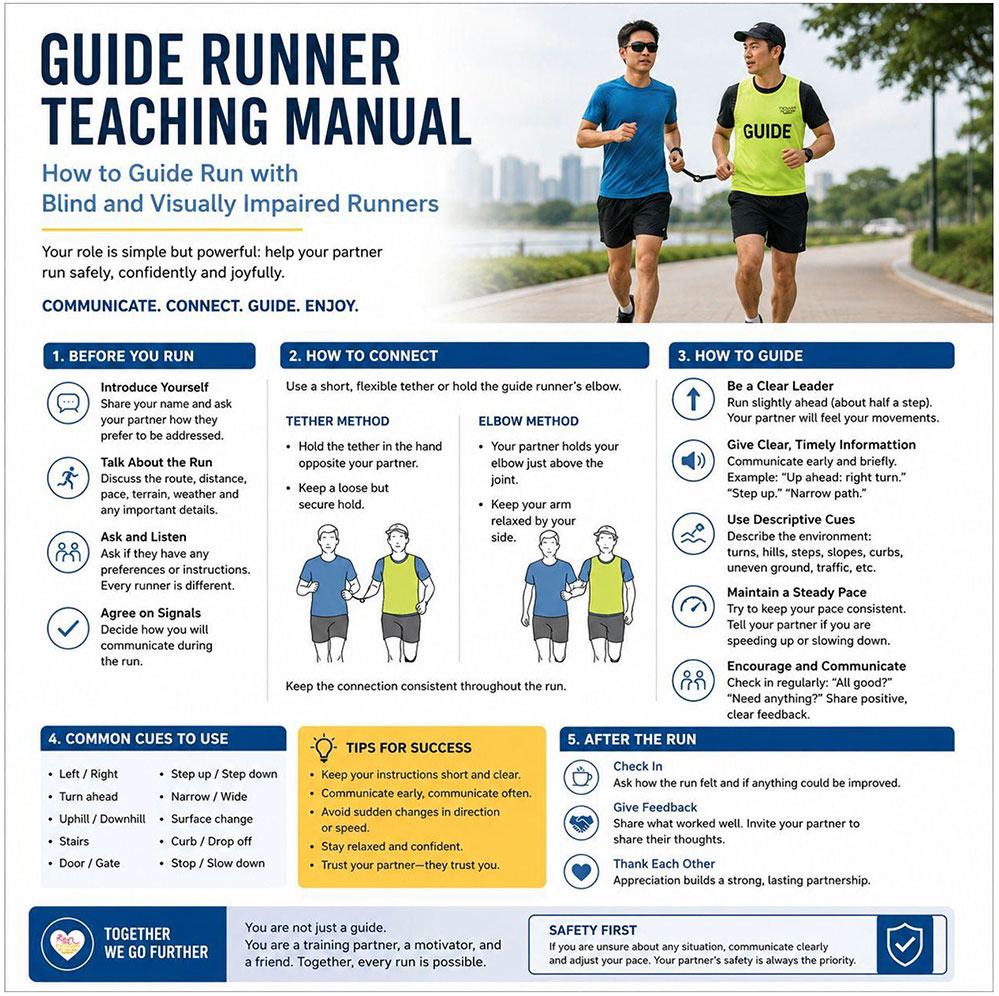
Guide Runner Teaching Manual


How to Guide Run with Blind and Visually Impaired Runners

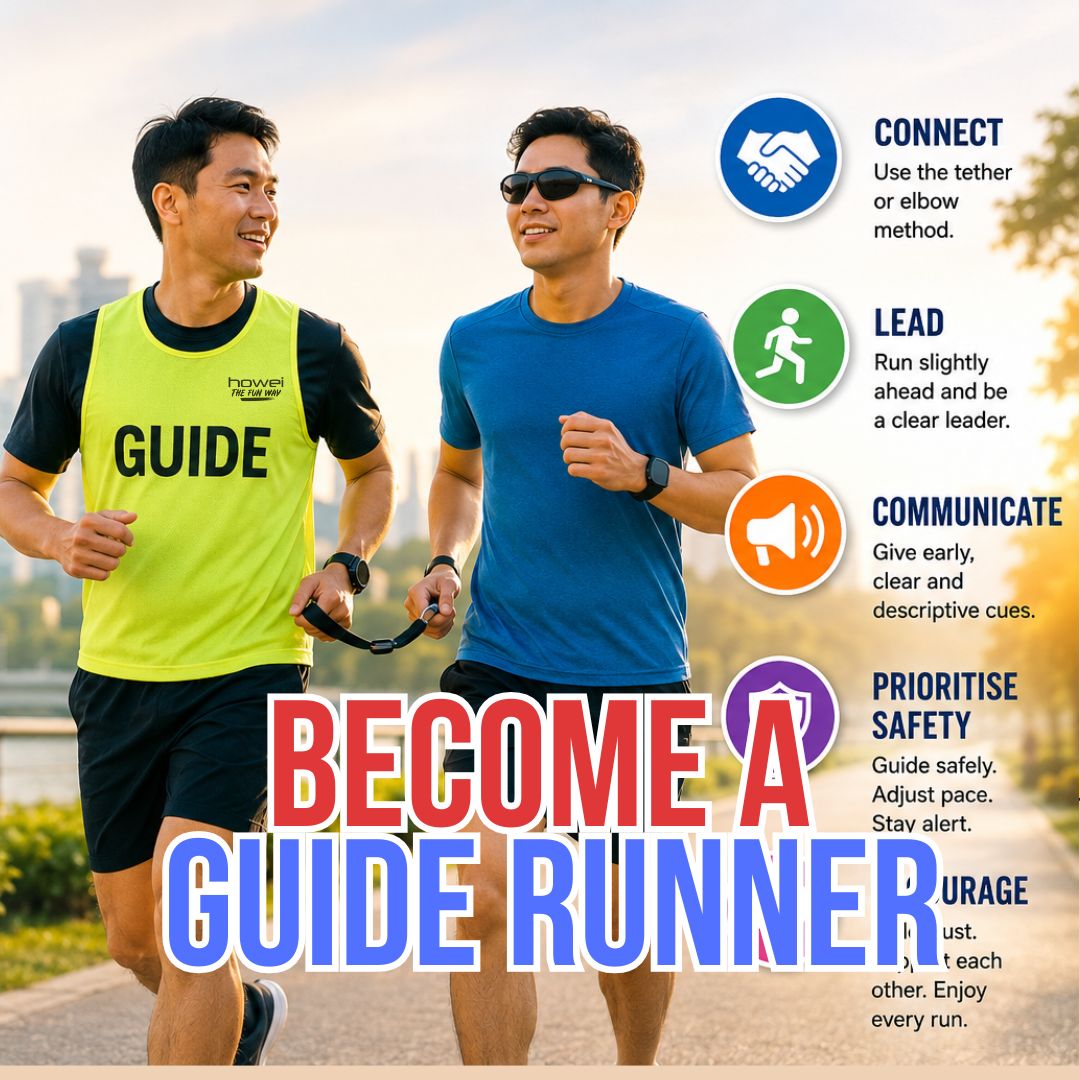
Your role is simple but powerful: help your running partner run safely, confidently, and joyfully.

Communicate. Connect. Guide. Enjoy.


1. Before You Run

Introduce Yourself

  • Share your name.
  • Ask your partner how they prefer to be addressed.
  • Briefly explain your guiding experience if relevant.

Talk About the Run

Discuss:

  • Route and terrain
  • Distance and pace
  • Weather conditions
  • Any potential obstacles or crowded areas

Ask and Listen

Every runner is different.

  • Ask about their preferences.
  • Find out how much verbal guidance they prefer.
  • Clarify any medical or safety considerations.

Agree on Communication Signals

Decide:

  • Which words or cues to use
  • How to warn about hazards
  • How to communicate slowing, stopping, or turning

2. How to Connect

Tether Method

A short running tether connects guide and runner.

Tips:

  • Hold the tether comfortably and lightly.
  • Maintain gentle tension.
  • Avoid pulling or jerking movements.

Elbow Method

The visually impaired runner lightly holds the guide runner’s elbow or upper arm.

Tips:

  • Keep your arm relaxed.
  • Run naturally and steadily.
  • Stay slightly ahead of your partner.

General Rule

Maintain a consistent connection throughout the run.


3. How to Guide

Be a Clear Leader

  • Run about half a step ahead.
  • Your movement helps communicate direction and pace.

Give Early, Clear Information

Provide short, timely cues.

Examples:

  • “Step up”
  • “Step down”
  • “Narrow path”
  • “Left turn ahead”
  • “Runner passing on the right”

Use Descriptive Cues

Describe:

  • Curbs
  • Slopes
  • Uneven surfaces
  • Puddles
  • Traffic
  • Tight spaces
  • Sharp turns

Maintain a Steady Pace

  • Avoid sudden acceleration or stopping.
  • Inform your partner before changing speed.

Examples:

  • “Slowing down”
  • “Stopping in 3…2…1”
  • “Picking up pace slightly”

Encourage and Communicate

Check in regularly:

  • “Everything okay?”
  • “Need anything?”
  • “Comfortable pace?”

Positive communication builds trust and confidence.


4. Common Running Cues

Situation

Cue

Left turn

“Left”

Right turn

“Right”

Uphill

“Uphill”

Downhill

“Downhill”

Stairs up

“Step up”

Stairs down

“Step down”

Narrow space

“Narrow”

Open space

“Wide”

Curb/drop

“Curb” or “Drop”

Uneven ground

“Uneven surface”

Stop

“Stopping”

Slow down

“Slowing”


5. Safety Tips

  • Prioritise the runner’s safety over pace or performance.
  • Avoid sudden directional changes.
  • Stay alert to cyclists, vehicles, pets, and crowds.
  • Use well-known or safer running routes when possible.
  • If unsure, slow down and communicate clearly.

6. After the Run

Check In

Ask:

  • How did the run feel?
  • Was the communication helpful?
  • Anything to improve next time?

Share Feedback

Constructive feedback helps both runners improve.

Appreciate the Partnership

Guide running is teamwork built on trust, rhythm, and communication.


Quick Reminders for Guide Runners

  • Speak clearly
  • Stay calm
  • Guide early, not late
  • Keep instructions short
  • Run predictably
  • Listen actively
  • Encourage often

Take Home Message


You are not just a guide runner.

You are:

  • a training partner,
  • a navigator,
  • a motivator,
  • a trusted teammate, 
  • and a human being.

Together, every run becomes possible. 


What are you waiting for? 


Isn’t it about time for you to experience it for yourself by registering for our guided VIP run events? 


Come join our fun guided runs and outdoor events! 


There are tons of opportunities you can seize upon riding the wave of event popularity. Join us at Howei today if you’re keen to start your own journey.


Home Search QR Hobay Profile